If you are searching for a neighborhood in Wilsonville, the biggest question may not be which home you like first. It may be which kind of neighborhood life fits you best. Some areas are built around walkability, parks, and nearby services, while others center more on golf, private amenities, or traditional subdivision living. This guide will help you compare Villebois with Wilsonville’s other neighborhood options so you can better understand how daily life may look in each. Let’s dive in.
Why Villebois stands out
Villebois is Wilsonville’s clearest example of a mixed-use master-planned neighborhood. The City of Wilsonville describes it as an award-winning, walkable community with a village-inspired design, and notes that it is nearly built out with final phases still under construction.
That matters because Villebois was planned to be more than a collection of homes. Its concept plan includes more than 2,300 homes, a commercial and employment core, interconnected roads and trails, and a focus on natural spaces in west Wilsonville.
For many buyers, that creates a different feel from a standard subdivision. Instead of relying only on citywide amenities, you get a neighborhood that was designed to support more of your daily routine close to home.
What daily life in Villebois looks like
Walkability and mixed-use design
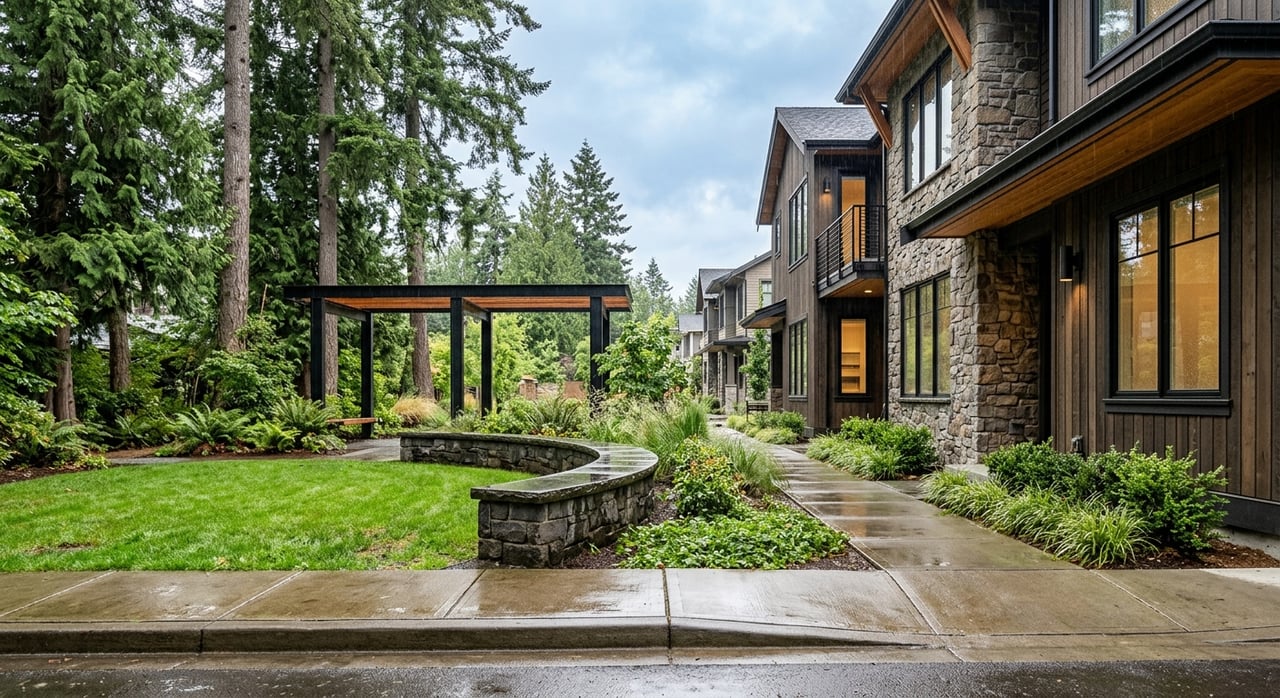
Villebois was designed as a pedestrian-friendly neighborhood with a mix of single-family homes, condominiums, row homes, apartments, plazas, parks, green space, and a small commercial district. That mix gives the area a more self-contained feel than many other Wilsonville neighborhoods.
The mixed-use character is still expanding. The Villebois Village Center project includes 143 apartments and ground-level retail space, reinforcing the neighborhood’s village-center concept and access to everyday services.
If you value being able to move through your neighborhood on foot or by bike, Villebois offers one of the strongest examples of that in Wilsonville. The design is meant to support connected living, not just residential density.
Parks and outdoor access
One of Villebois’ biggest strengths is its park and trail network. The city says development in the area includes trails and greenways, neighborhood parks, and pocket parks, with the Villebois Greenway connecting Coffee Lake Wetlands and Graham Oaks Natural Area into the Tonquin Regional Trail.
That gives you more than a single park at the center of the neighborhood. Instead, Villebois offers a network of public spaces spread throughout the community.
Several parks add to that appeal:
- Sofia Park includes water features, picnic shelters, playground equipment, and walking trails
- Edelweiss Park includes basketball and pickleball
- Trocadero Park includes a skate park
- Palermo Park includes a sport court
- Montague Park is open to the public
For buyers who want easy outdoor access, this setup can support a lower-car, more park-connected lifestyle. Graham Oaks Nature Park also adds three miles of trails and serves as a launching point for the Ice Age Tonquin Trail.
Transit and connectivity
Transit is another area where Villebois separates itself. SMART’s current service includes Route 7, the Villebois Route, and the V Villebois Shopping Shuttle.
The neighborhood is also described by the city as a short walk or bike ride from SMART Central and the WES commuter rail station. In practical terms, that can make Villebois appealing if you want neighborhood-scale walkability plus access to broader regional connections.
SMART also states that residents should be able to walk or bike to parks, schools, commercial areas, employment centers, and transit stops. That goal aligns closely with how Villebois was planned.
How Villebois compares to Charbonneau
Charbonneau is the most obvious comparison if you are looking at planned communities in Wilsonville. The city describes it as one of Oregon’s earliest planned communities and identifies it as a golf-course community south of the Willamette River.
Like Villebois, Charbonneau includes a range of housing types. The city says options there include condos, apartments, traditional single-family homes, golf-course homes, waterfront properties, and gated executive estates.
The lifestyle difference
The biggest difference is how each neighborhood appears to organize daily life. Villebois is built around public parks, trails, walkable streets, and a mixed-use village structure.
Charbonneau appears more recreation- and club-centered. Its HOA resources include reservation calendars, recreation contacts, pools information, and references to the country club and golf club, which suggests a more association-managed amenity structure.
Neither model is automatically better. It really depends on whether you prefer a public, street-and-park-oriented neighborhood feel or a community shaped more heavily around private recreational amenities.
Transit difference
Transit access also looks different between the two neighborhoods. Villebois has a named local SMART route and a shopping shuttle in the current route list.
By contrast, the city notes that the SMART Charbonneau shuttle pilot was discontinued, and the area is now served through Dial-a-Ride and other options. If regular route-based transit matters to you, that is a meaningful distinction.
How Villebois compares to Frog Pond
Frog Pond is better viewed as Wilsonville’s future master-planned district than as a direct substitute for Villebois today. The adopted master plan says the area is intended to identify homes, parks, open spaces, streets, trails, neighborhood amenities, and infrastructure needs over the next 10 to 20 years.
The city also says Frog Pond West is already under construction. So if you like the master-planned concept but are open to a neighborhood that is still taking shape, Frog Pond may be worth watching.
Mature neighborhood versus future opportunity
This is where Villebois has a clear advantage for buyers who want to see and experience the neighborhood now. Villebois is already established enough to show how its parks, trails, housing mix, and transit connections function in real life.
Frog Pond, on the other hand, represents future potential. Its planning is also centered on connected blocks, walkability, and neighborhood structure, but much of that vision will continue to unfold over time.
If you prefer a more proven environment today, Villebois has the edge. If you are comfortable buying into a newer area as it develops, Frog Pond may be an interesting long-term option.
How Villebois compares to Wilsonville’s other neighborhoods
Wilsonville includes many other planned residential developments and HOA communities, including Wilsonville Meadows, Canyon Creek Estates, Canyon Creek Meadows, Park at Merryfield, Montebello, Jaci Park, Fox Chase, Landover, and Brenchley Estates.
Based on the city’s neighborhood framework, these are useful to think of as more conventional subdivision-style options rather than self-contained villages. In many of these areas, daily life may connect more directly to Wilsonville’s shared amenities such as parks, the library, shopping, dining, SMART Central, WES, and trail access across the city.
That does not make them less appealing. It simply means the neighborhood itself may play a different role in your day-to-day experience.
Self-contained village versus shared city amenities
If you choose Villebois, you are choosing a neighborhood with a stronger internal identity. Its parks, greenways, mixed housing types, small commercial presence, and transit connections are part of the neighborhood’s built-in structure.
If you choose a more conventional subdivision, you may still enjoy excellent access to Wilsonville amenities, but the lifestyle may feel less village-like and less centered on a neighborhood core. For some buyers, that is perfectly fine and even preferable.
Which Wilsonville neighborhood model fits you?
A helpful way to compare Wilsonville neighborhoods is to think about how you want everyday routines to work. Ask yourself whether you want:
- A neighborhood with internal parks and trail connections
- Some nearby retail and services within the community
- Access to route-based local transit
- A more established recreation or golf-oriented setting
- A more traditional subdivision tied to citywide amenities
- A newer master-planned area that is still evolving
Villebois is the strongest current example in Wilsonville if you want walkability, mixed-use planning, public parks, and strong neighborhood connectivity in one place. Charbonneau offers an older planned-community model with a different recreational focus. Frog Pond represents the next chapter of master-planned growth. Other Wilsonville neighborhoods may suit you if you prefer a more conventional residential setting.
Final thoughts on Villebois
Villebois compares well because it offers a mature version of the master-planned idea. It is not just a neighborhood with newer homes. It is a neighborhood designed around movement, public space, and a village-style layout that supports day-to-day convenience.
If that matches the way you want to live, Villebois deserves a close look. And if you are still weighing it against Charbonneau, Frog Pond, or another Wilsonville neighborhood, a side-by-side conversation can help you narrow the options based on how you actually want your days to function.
If you want help comparing Wilsonville neighborhoods or planning your next move in the Portland metro area, Tracy Brophy can help you evaluate your options with clear guidance and a steady, local perspective.
FAQs
How is Villebois different from other Wilsonville neighborhoods?
- Villebois is Wilsonville’s clearest mixed-use, walkable master-planned neighborhood, with an internal network of parks, trails, housing types, some commercial space, and transit connections.
How does Villebois compare with Charbonneau in Wilsonville?
- Villebois is more centered on public parks, walkability, and mixed-use design, while Charbonneau is an older planned community with a golf-oriented identity and more association-managed recreational amenities.
Is Frog Pond an alternative to Villebois in Wilsonville?
- Frog Pond is better understood as Wilsonville’s future master-planned district, with development and neighborhood structure continuing to take shape over the next 10 to 20 years.
Does Villebois have transit access in Wilsonville?
- Yes. SMART lists Route 7, the Villebois Route, and the V Villebois Shopping Shuttle, and the city says the neighborhood is a short walk or bike ride from SMART Central and the WES commuter rail station.
What kinds of parks are in Villebois?
- Villebois includes multiple public parks with features such as playgrounds, walking trails, picnic areas, basketball, pickleball, a skate park, and sport courts.
Who might prefer Villebois in Wilsonville?
- Buyers who want a neighborhood with walkability, trail access, public parks, mixed housing, and a more self-contained village feel may find Villebois especially appealing.