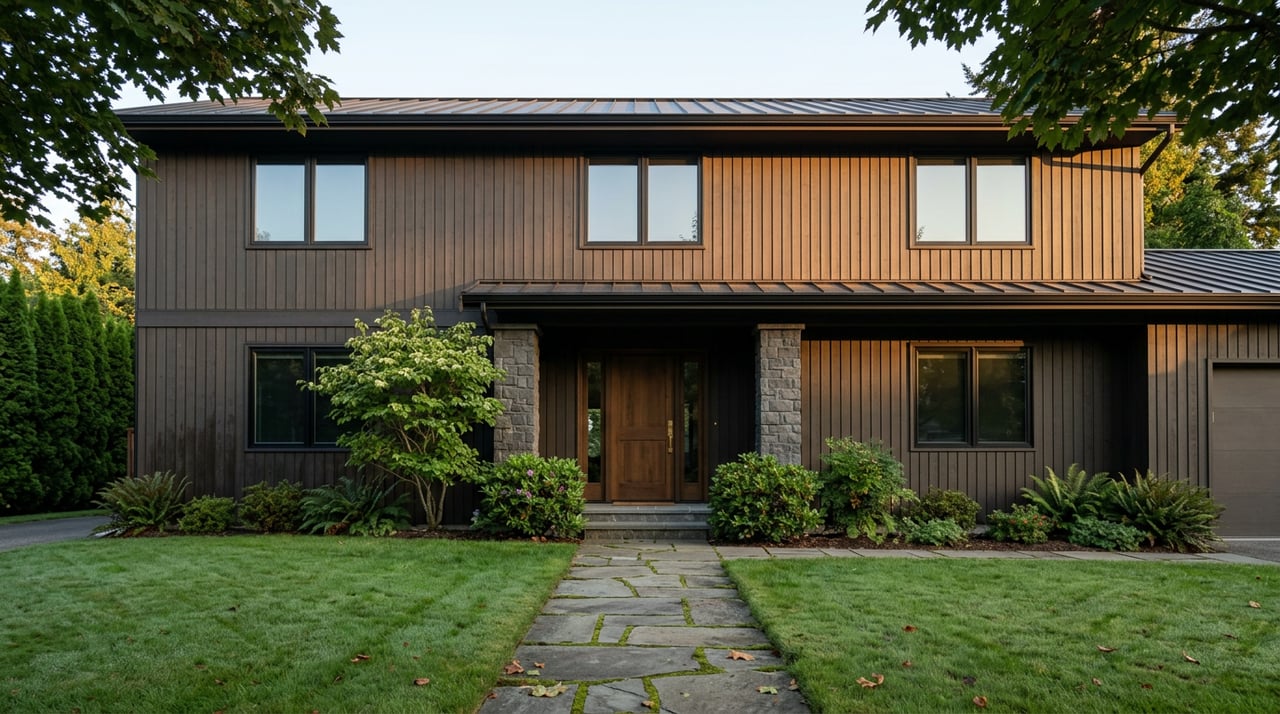
A short metal pipe capped just above grade, set a few feet from the foundation, is one of the least noticed features on an older Beaverton lot. Most owners walk past it for decades without a second glance. It is the fill pipe for a heating oil tank, and on homes built before 1980 in neighborhoods like Cedar Hills, there is a real chance one is still buried underneath the lawn.
That pipe does not show up on a listing sheet. It shows up during escrow, usually after an inspector has already found it, and by then the seller is negotiating from a weaker position than they would have been in three months earlier.
The Law Sets a Lower Bar Than You Expect
Oregon's rule on abandoned underground heating oil tanks is narrower than most sellers assume. Under ORS 466.878, an owner has to pump out all the oil from an unused underground tank at three specific moments: when they stop heating with oil, when they replace the tank, and when they sell the property. That is the legal floor.
Actual decommissioning, meaning cleaning the tank and either removing it or filling it with inert material, certifying the work through a state-licensed provider, and filing the report with Oregon's Department of Environmental Quality, is voluntary once the tank has been emptied. The governing statute is even titled "Certification of voluntary decommissioning." DEQ's own guidance states this plainly: once a tank has been emptied of oil, actual decommissioning is voluntary.
Disclosure is a separate requirement and it is not optional. Under ORS 105.464, a seller must give the buyer a disclosure statement addressing whether the owner knows of any underground storage tanks or any contaminated soil or water on the property.
So the honest legal summary is this: you must tell the buyer the tank exists, and you must prove it is empty. You do not have to prove it is gone.
What Removal Actually Costs
Where a seller lands within these ranges depends on tank size, soil condition, and whether contamination shows up in testing.
| Scope of work | Typical cost range |
|---|---|
| Closure in place (tank cleaned, filled with inert material, left buried) | $2,000 to $5,000 |
| Full removal with excavation, no contamination found | $5,000 to $15,000, higher for tanks under structures or on tight lots |
| Soil sampling | $500 to $2,000 |
| Cleanup when contamination is confirmed | $5,000 to $50,000 or more, depending on extent |
Oregon does not run a reimbursement fund for residential heating oil releases the way a handful of other states do. Whatever a seller spends here comes out of their own proceeds, not a state program.
The Gap Where Sellers Lose Negotiating Room
Here is the part that catches people off guard: the legal minimum and the practical minimum are not the same number, and the difference gets decided during escrow rather than before listing.
Many lenders will not approve a mortgage on a home with an underground oil tank once they know it is there, largely over concerns about future remediation cost. The signed decommissioning report filed with DEQ is the document lenders and title companies typically want to see at closing, regardless of what Oregon law technically requires the seller to have done beyond emptying the tank. Buyers who are paying attention know this too, and it is common for them to insist on a certified decommissioning as a condition of the sale even when the seller has already met every legal obligation.
That is the real mechanism worth understanding before you list. Meeting Oregon's minimum protects you legally. It does not protect your closing timeline, and it does not protect your list price if a buyer's lender won't touch the property until the tank is gone and documented.
The 90-Day Clock Nobody Mentions at Listing
There is a second timing trap specific to this process. DEQ will not accept site assessment or soil sample data that is more than 90 days old when certifying a decommissioning or cleanup. If a seller tests the soil in March ahead of a spring listing and the transaction does not close until July, that data can expire before closing, forcing a second round of sampling and pushing the timeline further.
This matters more in Beaverton than it might in a market with faster average closings, simply because the housing stock that carries this risk (pre-1980 construction) tends to sit at higher price points that draw more financing contingencies, more inspection negotiation, and longer escrows overall. A seller who tests early and lists immediately is fine. A seller who tests early and then waits, or whose transaction stretches past three months, may be paying for a second test they did not budget for.
There is one more wrinkle worth knowing if a tank was decommissioned years ago rather than recently: decommissionings completed before 2009 may not have removed all the contaminated soil that current standards would require, and DEQ's own records for this program only go back to March 2000. A tank closed in the 1990s, or one closed properly in 2005 under looser standards, can still prompt a buyer to request new testing. Old paperwork is reassuring, but it is not automatically sufficient.
Which Beaverton Homes This Actually Touches
This is not a citywide concern. It is concentrated in specific pockets of older construction.
Cedar Hills is the clearest example, with a housing stock built primarily in the 1950s and 1960s on mature, well-treed lots close to Cedar Hills Crossing. More broadly, Beaverton's oldest neighborhoods cluster around the historic downtown core and the Metzger district, dating from when Beaverton was still a small farming community becoming a suburb, and the city's established mid-century pockets beyond that core were built mainly through the 1960s and 1970s.
That is exactly the era when oil heat was standard before homes converted to natural gas, and it is exactly the housing stock where a buried tank is most likely to still be sitting under the yard, whether or not the current owner has ever used it or even knows it is there. Newer construction in areas like South Cooper Mountain, built mostly from the 1990s forward, does not carry this same exposure.
If a tank was there and nobody has looked, the physical signs are modest but consistent: a capped metal fill pipe near the foundation, a smaller vent pipe nearby, copper oil supply lines in the basement that have been capped rather than connected to current equipment, or a furnace that shows signs of a prior oil-to-gas conversion. None of these are conclusive on their own, but together they are usually enough for an inspector or an environmental contractor running a tank sweep to confirm what is underground.
What This Means If You're Listing This Year
The practical move for a seller in one of Beaverton's older neighborhoods is to find out what is under the yard before a buyer's inspector does. A tank sweep runs a few hundred dollars and turns an unknown into a known quantity while there is still time to plan around it, whether that means completing a full decommissioning before listing, pricing the home with the cost built in, or negotiating it as a credit at closing.
The choice between paying for it up front and negotiating around it later is a pricing decision, not a legal one, and it depends on the specific tank, the buyer pool for that price point, and how the home is positioned. That is a conversation worth having with a local agent before a list price gets set, not after an inspection report surfaces a surprise.
Frequently Asked Questions
Do I have to disclose an oil tank I decommissioned years ago? Yes. Oregon's disclosure statement asks whether there are any tanks or underground storage tanks on the property, and a tank that was filled in place rather than physically removed is still on the property, even if it was properly closed.
What if I don't know whether there's a tank on my property? If ownership history is unclear, DEQ recommends hiring a qualified environmental contractor to check before listing. A tank sweep using ground-penetrating radar is the standard method and is far less expensive to arrange on your own schedule than to have a buyer request it mid-escrow.
Does homeowner's insurance cover any of this? Coverage varies by carrier and policy, and most standard homeowner's policies do not cover tank removal or contamination cleanup by default. It is worth a direct call to your insurance agent before assuming any of this is covered.
If you are getting ready to list an older home in Cedar Hills or anywhere in Beaverton's established mid-century neighborhoods, this is exactly the kind of detail worth sorting out before a buyer's inspector finds it for you. Tracy Brophy has spent two decades guiding sellers through the Portland metro's older housing stock, and a market consultation before you list is the simplest way to walk into escrow with the timeline and the numbers already worked out.