Choosing between Oregon City’s historic core and a newer subdivision is not just about age. It is about how you want to live day to day, how much home upkeep you are ready for, and what kind of rules or review process comes with the property. If you are weighing charm against convenience, or character against predictability, this guide will help you compare both paths with more confidence. Let’s dive in.
Oregon City offers two distinct lifestyles
Oregon City is a largely owner-occupied city, with 65.3% of homes occupied by owners. The median owner-occupied home value is $555,800, and the mean travel time to work is 26.5 minutes. In practical terms, many buyers here are balancing commute, budget, maintenance, and neighborhood feel all at once.
That makes the choice between an older home and a newer subdivision especially important. In Oregon City, the decision often comes down to a tradeoff between architectural character, ongoing upkeep, and daily convenience. Neither option is automatically better. The right fit depends on your priorities.
Historic Oregon City homes
What the historic core feels like
Oregon City’s historic core has a more layered and established feel than many newer areas. The McLoughlin neighborhood sits above the original townsite on the bluff, and its layout still reflects the city’s early plat. Many blocks are about 200 by 200 feet, divided into 50 by 100-foot lots, often with alleys.
That older pattern helps explain why the historic core can feel more connected, compact, and varied. As downtown became more crowded over time, residents moved uphill, which added to the area’s dense, mixed character. If you enjoy neighborhoods that developed gradually over many decades, this part of Oregon City may feel especially appealing.
Architecture is mixed, not uniform
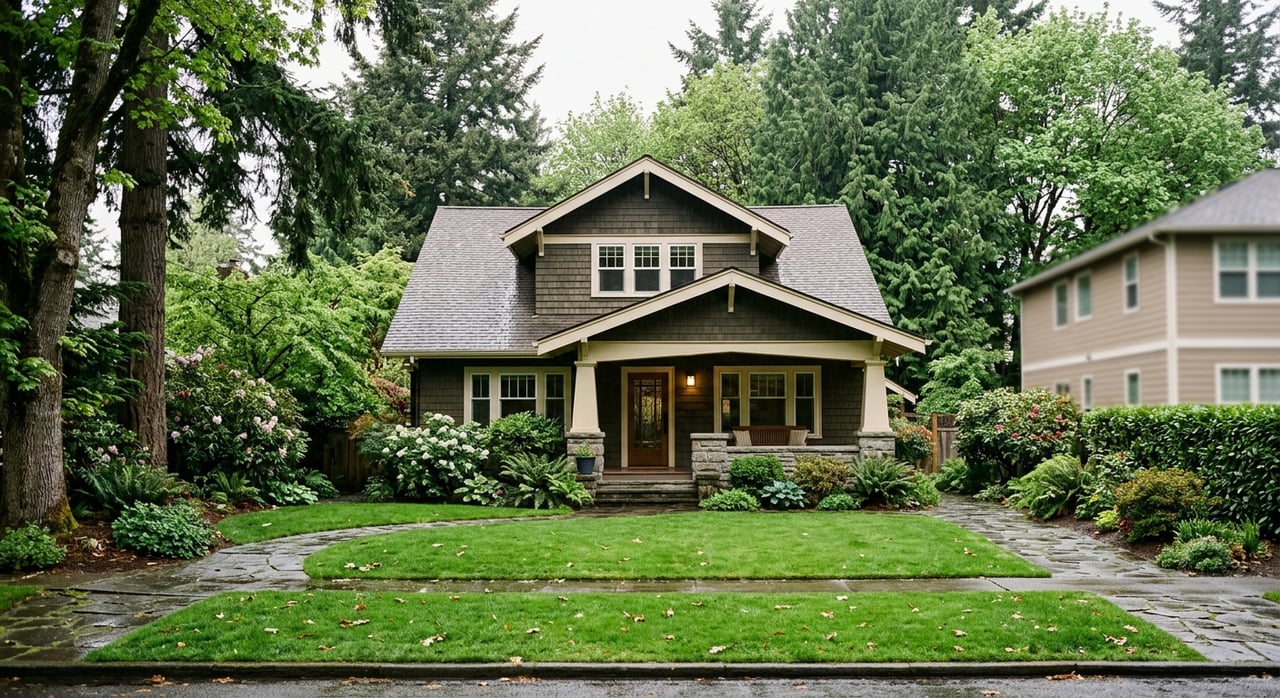
One of the biggest draws of the historic core is variety. The McLoughlin district is known for a checkerboard mix of home styles, including Queen Anne homes, vernacular houses, bungalows, post-1925 homes, apartment buildings, Four-Square homes, and older commercial buildings.
Canemah adds another layer of history. The city describes it as a relatively intact riverboat town with resources dating to the 1860s. If you want a home with visible ties to Oregon City’s past, these areas offer a very different experience from a newer planned neighborhood.
Historic review matters
Character often comes with extra oversight. Oregon City has two local historic districts, the McLoughlin Conservation District and the Canemah National Register District, and roughly 60 historic landmarks outside those districts are also regulated locally.
If a home is locally designated or located within one of these districts, many exterior changes require historic review. That can include windows, doors, siding changes, additions, new construction, and demolition. For some buyers, that review process helps protect neighborhood character. For others, it adds time and design limits to future projects.
Maintenance can be more involved
Older homes often require a more thorough inspection and a wider maintenance budget. It is smart to look closely at the roof, siding, windows, plumbing, electrical systems, and foundation before you move forward.
If the home was built before 1978, you should also plan for lead-safe renovation considerations. Paid work that disturbs painted surfaces in pre-1978 homes must follow lead-safe rules, which can affect both cost and project planning. In a historic district, exterior work may also trigger city review, so it helps to think ahead before taking on updates.
There may be help for some repairs
Historic ownership is not only about restrictions. Oregon City offers a 50/50 matching grant program for selected repair work, including items such as windows, porch or foundation repair, and some exterior restoration.
That does not mean every project will qualify, but it is worth asking about before you commit to repairs. If you love the idea of restoring an older home, this can be a meaningful part of your budget planning.
Newer subdivisions in Oregon City
What newer neighborhoods are designed to do
Newer subdivisions in Oregon City are not always as simple as “new house, suburban layout.” The city’s South End Concept Plan describes these areas as low-density single-family neighborhoods that mix larger-lot county subdivisions with newer city subdivisions.
The plan also says these neighborhoods are intended to be walkable and diverse. In some areas, homes are clustered near neighborhood centers, with larger lots toward the edges, rear service alleys in many blocks, and paths, trails, and family-friendly streets that connect residents to downtown Oregon City and the wider region.
New homes often feel more predictable
For many buyers, the appeal of newer construction is clarity. You are more likely to get current building standards, newer systems, and a home that needs fewer immediate repairs. That can make budgeting easier, especially if you want to avoid a long list of early maintenance projects.
There is also a more formal review and permit process behind the scenes. According to the city, a new single-family detached home typically requires permits from Planning, Building, and Public Works, and review is usually completed in about two weeks.
Public improvements can affect the purchase
A new home can still come with moving parts. Oregon City notes that public improvements such as property dedication, street work, and sidewalk improvements may be required if they were not already built to current standards.
System development charges are also part of the process for new single-family homes. As a buyer, it is important to confirm what has been completed, what may still be pending, and whether any costs tied to the new construction process could affect your closing.
HOA and planned community rules may apply
Many newer subdivisions are part of a planned community. Under Oregon law, planned communities are created through a recorded declaration, and they are generally governed by documents such as declarations, bylaws, and CC&Rs.
That means you should not assume the rules are informal or minimal. Before you make an offer, ask for the recorded declaration, bylaws, CC&Rs, dues schedule, reserve information, and community rules. This gives you a better picture of how the neighborhood is run and what ownership will involve.
Historic district review vs HOA rules
This is one of the most important differences between the two options. A historic home may have fewer subdivision-style dues and fewer HOA-style rules, but it can come with city preservation review for exterior changes.
A newer subdivision may have more private rules through an HOA or planned community structure, but fewer preservation-related design reviews tied to the home’s age. In short, one path often leans toward city oversight for exterior compatibility, while the other may lean toward neighborhood governing documents and dues.
Commute and access considerations
Location matters just as much as the home itself. Oregon City’s commute and access patterns are highly location-specific, so it helps to compare your likely routes and daily errands, not just the house features.
The city’s Municipal Elevator links downtown with the upper residential and business districts. Downtown is also served by public transit through the Oregon City Transit Center on 11th between Main and McLoughlin, with connections to routes 31, 32, 33, 34, 35, 76, 79, CAT, and ClackCo Connects.
The city has also improved McLoughlin Boulevard with continuous sidewalks, a multi-use path, on-street parking, and stronger connections between the regional highway network and downtown. If access is high on your list, it is worth visiting both an older neighborhood and a newer subdivision at the times you would actually be driving or walking.
How to decide which fits you
A historic home may fit you if
- You value mixed-era architecture and original neighborhood patterns
- You want a home with more visible character and history
- You are comfortable with a deeper inspection and ongoing maintenance planning
- You understand that exterior projects may require historic review
- You are open to researching grant opportunities for qualifying repairs
A newer subdivision may fit you if
- You prefer newer systems and more predictable maintenance
- You want a home built through current permit and construction standards
- You like the structure of planned community documents and rules
- You want to confirm public improvements and builder completion before closing
- You are looking for a neighborhood that may include paths, trails, and newer street layouts
Smart due diligence for both options
No matter which path you prefer, a careful review process matters. For an older home, verify whether the property is locally designated or located in the McLoughlin or Canemah districts. Then make sure your inspection fully covers major systems and any age-related concerns.
For a newer home, confirm whether the property is in a planned community and review all governing documents early. You should also ask about system development charges, pending public improvements, and the completion status of grading, sidewalks, drainage, and other site work.
A side-by-side comparison often makes the choice clearer. When you look beyond surface finishes and focus on rules, maintenance, access, and long-term fit, the right answer usually stands out.
If you are comparing older homes and newer construction in Oregon City, working with a local, process-driven advisor can help you sort through the details before you commit. To talk through your options or get a clear plan for your next move, reach out to Tracy Brophy.
FAQs
What makes historic homes in Oregon City different from newer subdivision homes?
- Historic homes in Oregon City often offer mixed architectural styles, older lot patterns, and more visible character, while newer subdivision homes tend to offer newer systems, current construction standards, and planned community structures.
What historic districts should homebuyers know in Oregon City?
- Oregon City has two local historic districts, the McLoughlin Conservation District and the Canemah National Register District, plus roughly 60 historic landmarks outside those districts that are also regulated locally.
What changes require review for historic homes in Oregon City?
- Exterior alterations such as windows, doors, siding changes, additions, new construction, and demolition can require historic review for locally designated properties and homes within the McLoughlin and Canemah districts.
Do newer subdivisions in Oregon City always have HOA rules?
- Not always, but many newer subdivisions are part of a planned community, so you should ask for the recorded declaration, bylaws, CC&Rs, dues information, reserve details, and rules before making an offer.
What should buyers inspect in an older Oregon City home?
- Buyers should look closely at the roof, siding, windows, plumbing, electrical systems, foundation, and any lead-safe renovation concerns if the home was built before 1978.
What should buyers confirm on a newer Oregon City home?
- Buyers should confirm the status of permits, public improvements, grading, sidewalks, drainage, system development charges, and whether the home is part of a planned community with governing documents.
Is Oregon City convenient for commuting and getting downtown?
- Access depends on location, but Oregon City offers the Municipal Elevator, public transit connections through the Oregon City Transit Center, and improved pedestrian and roadway connections along McLoughlin Boulevard.